Continuation of [Part 1]
De-growth and Post-Growth
In the roundtable with Timothée Parrique, Olivier De Schutter, Fanny Parise and Agnès Bénassy-Quéré, it was reminded that the European Union has committed to reducing by 90% its CO² emissions by 2040. 8 member-states have given their guarantee to do so.
This will be possible with more sobriety, and probably not with a growth-based model.
In Sweden, the carbon tax allowed to diminish by 80% the CO² emissions of residential buildings.
“The economist that is only an economist will be a mediocre economist.”
Friedrich Hayek.
Post-growth and de-growth are decolonial topics, according to Olivier De Schutter.
Currently the North is still exploiting the South with resources (oil and gas, biomass, minerals, …) and cashflow flowing from South to North. We need to transition the global exchanges from South-North exchanges to more South-South exchanges. Economies need to be relocalized, renationalized, and democratized so that all can participate equitably.
There is a gap between macroeconomic indicators (GDP, …) and the well-being of populations. Studies show that once a certain level of comfort has been reached in “mature economies”, happiness does not increase anymore despite the GDP increasing. Conclusion: if the role of the economy is to satisfy human needs and increase the quality of life, once these needs are met, the economy can stop growing.
Timothée Parrique proposes to launch a Citizen’s convention on Prosperity, to have the people define what Prosperity means to them.
Each country’s citizen need to define what prosperity means for them. For instance, New Zealand created its own Prosperity Index.
A few references:
Parrique, T. Slow down or die: The Economics of Degrowth.
The beauty and role of water and forests
The round table on water and forests reminded me of the beauty of flying rivers and birds.
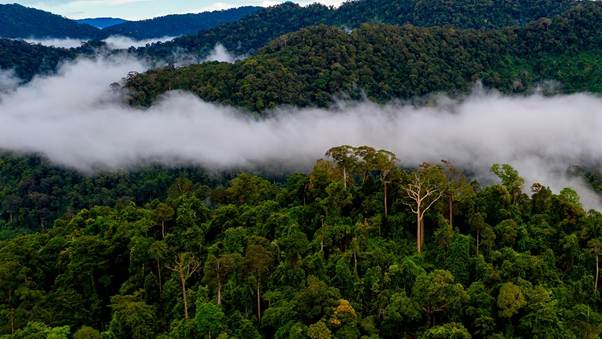
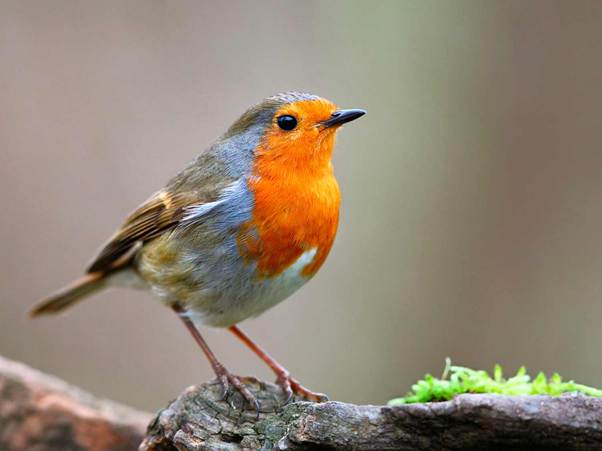
Our beloved planet earth is 4.57 billion years old. For most of its life (4bn years / 90%), it was a desert. It took life another 500 million years+ for plants to emerge, develop, grow and vegetate, thus creating the climate we had in the Holocene, through the miraculous phenomenon of evapotranspiration. Plants act like chimneys, pumping water from the grounds and evaporating it in the atmosphere, thus creating flying rivers. In the Amazon rainforest, there are still sand dunes under the forest.
A.I., always…
A roundtable on A.I. emphasized the need to control A.I. and remove biases from AI algorithms. The material footprint of A.I. needs to be reminded, since the vocabulary is often misleading: “the cloud”, “dematerialization”, … It can lead us to thinking that all these technologies are innocuous, weightless and light. As a reminder, a ChatGPT prompt emits 60 times the CO² emissions more than a regular search engine. Datacenters not only consume 20% of global energy, but they are responsible for 3.2% of the global carbon footprint (=more than the aviation sector), expected to grow to 14% by 2040.[1] That is not to mention the impacts on biodiversity loss and tremendous water consumption.
François Taddei reminded us of the power of this technology is exponential: the processing power used to double every 18 months according to Moore’s law. The computing power of A.I. is multiplied by 10 in a year.
It can be used for more control or more distributed intelligence though. For instance, Taiwan has used A.I. to foster collective intelligence in service of democracy. The trust in the democratic system has shifted from 9% to a whopping 70% by the Taiwanese population following this move.[2] Lesson to the West where democratic systems and trust in politicians and political systems has been falling apart for a while now.
It will be necessary for us to integrate future generations in our democratic decision making systems, and, as Yves Mathieu, the founder of Missions Publiques suggests, integrate representatives of the living systems in our democratic discussions as well. The goal is to become “good ancestors”, like indigenous peoples have been doing for centuries.
Final roundtable
In the final roundtable including Peter Wohlleben, the author of the bestselling The Hidden Life of Trees, Claire Nouvian gave an impassioned speech on the urgency of the situation. I know most of us know, but feeling the outrage of this woman, this mother, and this NGO director was a (re)wake-up call for me on the importance of the matter, and the importance of being emotional about what truly matters.
She pointed to the latest report on Planetary Solvency researched by the Institute and Faculty of Actuaries and the University of Exeter. This report explains that the +3°C scenario seems to be now more likely to occur than the +2°C scenario. With the +3°C, it is estimated that the global GDP would drop by 50%, and human population would be reduced by 4 billion people by 2070.
When called a “radical”, she points out, like Paul Watson that it is the actual destruction that is radical. Paul Watson talks about “ecocidal structures” which rule the economic and political world, and I agree with him. For the anecdote, when called an “ecoterrorist”, Paul Watson says that he has “never worked for Monsanto.” I couldn’t help but giggle. Humour is essential, especially in serious matters and challenging times.
Claire Nouvian reminded us that the oceans are the thermic regulators of our planet, and that we lost the Arctic carbon sink as announced in December 2024. Alpine and Pyrennean glaciers have lost 40% of their mass already, and 1/3 of glaciers classified as World Heritage Sites by UNESCO could disappear in the next 25 years. We have 5 more years (till 2030) to make a shift if we want to limit (and possibly reverse?) the damage.
Given that we have annihilated 95% of marine animals in 100 years for our own uses, Paul Watson called for a 75 year moratorium and general fishing ban for fish-populations to regenerate (notice I didn’t say “fish-stocks” as they are not a resource but fellow living-beings). Commercial fishing boats reject 70% of the animals they catch. Remember this next time you have a fish in your plate: for one fish in your plate, at least two other living beings have been tossed back into the sea, likely dead or dying. 83% of the fishing industry is industrial, and despite not being a profitable business, is highly subsidized… The rest is smaller artisanal fishery which is able to practice selective fishing and thus not have such a terrible impact on the environment.
Peter Wohlleben emphasized the need for joy, the transition doesn’t have to be painful and ascetic.
He reminded us of the power of the collective, for instance in Germany, 2 million people adhere in some of the biggest environmental NGOs. If these people demonstrated on the streets and mobilized themselves, maybe change could be more effective.
We only need a critical mass of 10-20% of the population to shift the transition.
As the Stern report pointed out, we need 1% of the global GDP to be directed towards the social and ecological transition.
I felt touched by the sharings of Nisreen Elsaim, a representative of Sudan Youth for Climate Change and Merem Tahar, representing the Association of women from the Tchadian diaspora. With sincerity and eloquence, they each shared some of their challenges, and the difference between the preoccupations of the people in their respective countries, compared to the developed Northern/Western countries (in Tchad, electric vehicles is far from people’s preoccupations). More immediate needs such as clean water, sanitation and sustainable food production are much more pressing. In Sudan, Mehem Tahar reminded of the war that is ongoing, and that she wishes that Sudanese people could demonstrate for the climate like what is possible in European countries for example.
I have to say that there was not a lot of ethnic diversity in the speakers overall. To put it more bluntly, unfortunately, a majority of the speakers were white people from WEIRD (Western Educated Industrialized Rich Democratic) countries.
Closing experience and call for action
The University of the Earth closed with a phenomenal performance by the Orchestre du Nouveau Monde, a group of young people dedicating their artistic talent to supporting the social and environmental transition by having people live a transformative musical experience.
Calls for action:
- Instead of focusing on all the negativity in the world, invest your time, attention and energy in planting seeds, and nourishing and sharing the visions, the projects that you love and with which you resonate.
- Reduce meat consumption. For instance, in Germany (which is similar to France in meat consumption and population size), if meat consumption was reduced to once a week, the liberated agricultural space of 90 000 square kilometres could be rewilded into natural habitats. 80% of landscapes are used for animal production. As an example, if the whole world transitioned to a plant-based diet (far fetched, I know), it would be the equivalent of India going carbon neutral.
- Reduce your fish consumption as much as you can, and source your fish from small selective fishing only.
- Switch to a plant-based diet as much as you can, as progressively as you can.
- How can you dedicate some of your time and attention to social and/or environmental causes?
- By joining a local or online group
- By individual action
- By creating your own initiative
- By transitioning your career (a career is 80 000 hours of your life that you dedicate to something. It impacts your life and the life of other human and non-human animals. You get to choose.)
Important dates:
30-31 march: SOS Oceans in Paris
22 April 2025: Earth Day
8 June 2025: Oceans Day
[1] https://www.computerworld.com/article/1657118/why-data-centres-are-the-new-frontier-in-the-fight-against-climate-change.html
[2] https://www.geekwire.com/2025/taiwan-digital-tools-government-trust/
 Jean-Sébastien Simon - Conscious Business Coach