Strasbourg, France, 19-21 September 2025
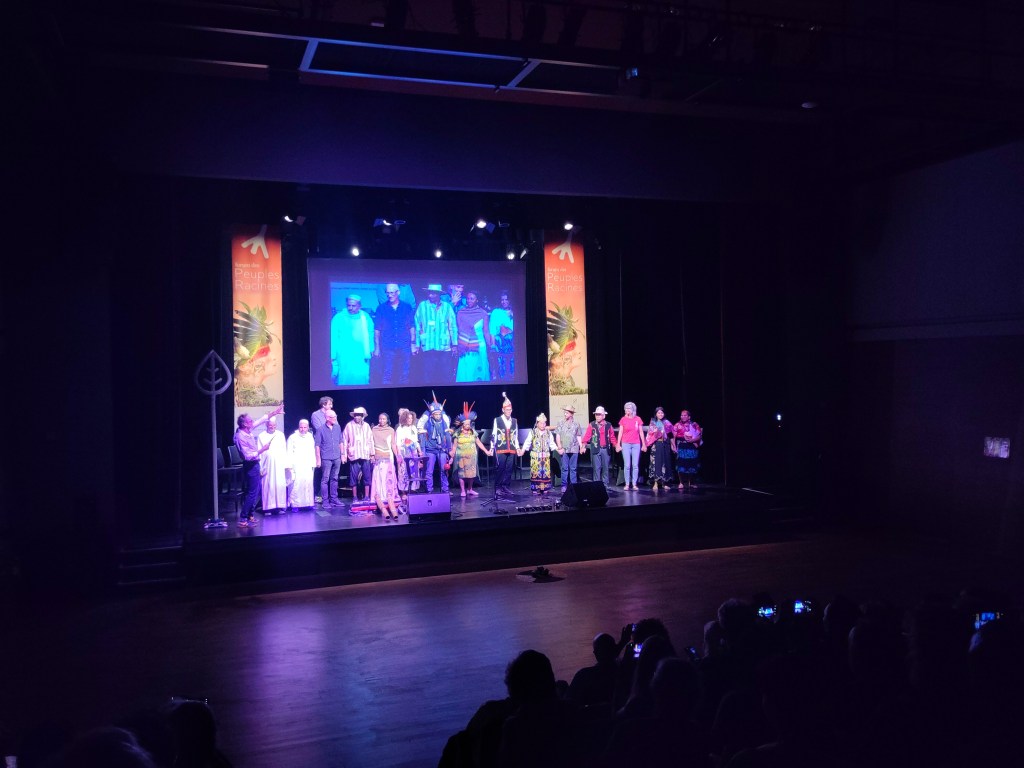
On September 19-21, I was fortunate to participate in the Forum des Peuples Racine, held in Strasbourg, France. This forum united representatives of five different indigenous communities to present their traditions:
The Betsimisaraka from Madagascar
The Maya from Mexico
The Penan from Borneo, Malaysia
The Kariri-Xocó from Brazil
And the Amazigh from Morocco
The main aim of the forum was to create a connection with indigenous people, and remind us all of the importance of essential values, indigenous traditions and customs, and environmental protection.
Context
To situate the global context, there are approximately 476 million Indigenous Peoples around the world. They play a crucial role in our societies and our ecosystems.
While constituting roughly 6% of the global population, they account for around 19 percent of the extremely poor of this planet. Indigenous Peoples’ life expectancy is up to 20 years lower than that of non-indigenous people worldwide.
Despite being the caretakers of 25% of the world’s surface area, Indigenous Peoples usually lack formal recognition, basic services, infrastructure, and access to justice, making them vulnerable to climate change, natural hazards, and disease outbreaks like COVID-19. This inequality and exclusion have left Indigenous Peoples unable to participate fully in the formal economy, political processes, and decision-making. [1]
In addition to the respect that is due to every human being on this planet, they play an essential role in preserving 80% of the world’s remaining biodiversity and still hold essential ancestral knowledge and expertise in adapting, mitigating, and reducing climate and disaster risks.
Furthermore, they speak 4000 of the world’s 7151 languages[2] which represents a rich cultural diversity, which often relies on oral transmission. This is an important figure since some estimates indicate that half of the world’s languages are at risk of disappearing by 2100.[3]
Economic and political support
Representatives of these communities shared with us some of their struggles: illegal logging, mining by large multinational corporations, poaching, being harassed, molested, raped by drug cartels, being marginalized, … Despite all these assaults on their cultures and communities, they keep a deep faith, keep praying not only for their communities, but for all of us, humanity as a whole, as they see us as one whole family.
That is an impression I left with: the reminder, felt in my body, that we are all one family, despite our differences.
Each community that attended the forum came with a project that they will develop further thanks to the funds raised during the forum:
The Kariri-Xocó from Brazil are developing their autonomy with medicine, and creating a learning container for traditional plant medicine
The Amazigh from Morocco are preserving their traditional dance of Taskiwin.
The Maya from Mexico are developing eco-touristic activities for local communities, that also give supplemental income thanks to visitors, as well as environmental awareness-raising, permaculture, reforestation projects, and maya culture preservation.
The Betsimisaraka from Madagascar are developing an initiative where local women transform plants harvested in the forest into medicine for local people.
The Penan from Borneo, Malaysia are creating a “House of Penan knowledge” to share their traditions with the younger generations, before these traditions go extinct.
Furthermore, the representatives of these five indigenous communities were invited for an audience at the European Parliament to plead their cause and ask for E.U. support to protect their communities. They came back deeply moved. It reminded me of the documentary The Twelve, showing representatives of twelve indigenous communities travelling to New York City to be received at the United Nations.
In the next post, I’ll share a few key takeways from meeting some representatives of some of these indigenous peoples.
Being in Joy
The theme of the forum was to “Being in Joy”.
I have to say that this was challenging for me on the first day, as a family member had just passed away. I felt the grief and sadness, and did not want to be joyful. Fortunately, Arnaud Riou, one of the speakers, reminded us that to experience deep joy, one must be able to experience deep sadness as well. The opposite of joy is not sadness, it is fear.
It seems that despite all the challenges they are facing, indigenous communities around the world are developing resilience thanks to the power of their communities and the valuable social ties they cultivate, their traditions, dating thousands of years, and are transmitted often orally, a deep relationship with their natural environment, from which they don’t distinguish themselves in their worldview. For them, trees, animals, plants are really seen as their direct relatives, which might seem weird for the western worldview which creates an arbitrary separation between self and “the natural world” (Cartesian worldview from a philosophical standpoint). Furthermore, their deep spirituality, embodied by all community members, and fostered by shamans and elders gives them a deep meaning and purpose in life.
Our western communities have a lot to learn, given our disconnection from the natural world, from each other (social fragmentation), and our deep yearning for meaning and purpose.

In a private conversation with Pajé (shaman) Ururay (cf picture above), from the Kariri-Xocó of Brazil, I asked him about his perception of the Western world, based on his several visits to France. He told me, with a sad look on his face, that in his community, people were not materially wealthy, but they were happy, and spiritually full. However, here in France, he saw material wealth, but that he perceived that most people were “empty from the inside”. It might sound cliché, but this testimonial confirmed what I have heard, read, and perceived personally over the years.
When asked what we could do to support them, he said:
“Do not lie, follow the path of the Creator, do not steal, do not commit sins, …”
During a roundtable, he added:
“To be a humble person, to help those who are sad so that they can experience joy, help the people who are sick, dance and sing to nourish one’s joyful spirit.”
The advice he gave was basic good ethical conduct. Cynicism might have us brush away these truisms, but what I felt touched by was that the representatives of these five communities embodied these qualities of wisdom, humility, sincerity and compassion.
They not only practiced, but were what they “preached”.
They literally walked their talk.
Meeting Pajé Ururay’s mother, Ivanice Tanoné, Cacique of the Kariri-Xocó people of Brazil was also a source of inspiration. She is the first woman to be nominated at this role in the community. The Cacique is a leader of the community, and helps it organize itself. She was very relaxed and laughed a lot. She inspired trust. It was a strong contrast with the image of most of our current political leaders, most of whom do not have the trust of the people they are supposed to serve (approval of political leaders has declined over the post-pandemic years to reach 40% in 2024)[4].
Coming back to the essentials
One of the key takeaways was also to remember what we truly need to experience fulfillment:
Not much.
Breathe fresh and pure air, drink clean water, eat healthy food, enjoy good relationships.
Yes, we can add fluffy stuff on top of that that we can enjoy, but human desires and cravings are endless.
Contentment is underrated in the West, and our societies are paying the price for it: psychological, social, economic, and environmental.
As Philippe Studer, the main organizer of the forum, pointed out:
“The secret to unhappiness is to not want what one has, and to want what one has not.”
Humbling reminder for us all, myself included…
It was also precious to see how indigenous people focus more on being than on doing, appearing and accumulating… A true sign of wisdom.
Lorenza Garcia shared some of the traditions of the Dine (Navajo) people of North America, in particular, Hózhó, the Path of Beauty. This worldview/spiritual path invites us to see and invoke beauty inside and outside us.
In the western material world where often beauty has been traded for practicality, functionality, utility, comfort, economy and affordability, this comes as a healthy reminder of what we crave. Back in Ancient Greece, Beauty was one of the three Platonic ideals, alongside Truth and Goodness.
On the side of “crazy wisdom”
Some of the highlights of these three days were the talks by Josef Schovanec. He shared his wisdom and deep knowledge through various stories from oriental traditions, in particular Arabic and Persian poetry, recited in Arabic and Farsi.
A story from Asia goes as follows:
A zen apprentice wants to cross a river.
However, the current is so strong that crossing the river seems too perilous.
On the other side, the apprentice sees a Zen master. He shouts towards him, hoping to receive some advice and guidance:
“Master, I would like to come to the other side. How do I cross this dangerous river?”
The Master pauses for a moment and shouts back, surprised:
“My son, why would you like to cross the river? You are already on the other side!”
Embodiment and Participation
One of the things I loved the most about this Forum is that it was not just a series of roundtables and conferences. As an audience, we got to participate in various activities:
Traditional Mayan ceremony, Kariri-Xocó songs and dances, Dine (Navajo) song and dance, reconnection with our ancestry, … This helped us get out of our heads and back into our body and our hearts (a salvatory job for the western person that unconsciously lives a disconnect between head, heart and body).
If people in power (political and business leaders, among others) engaged in these songs and dances, we would live in a very different society…
Further resources
If you are a French speaker, feel free to join next edition planned in 2027.
Ce que les peuples racines ont à nous dire: De la santé des hommes et de santé du monde, by Frederika Van Ingen
A variety of references in English is widely available too.
[1] https://www.worldbank.org/en/topic/indigenouspeoples
[2] https://www.cia.gov/the-world-factbook/field/languages/
[3] https://www.worldbank.org/en/topic/indigenouspeoples
[4] https://publicseminar.org/2025/02/trust-in-political-leaders-plummets-worldwide/
 Jean-Sébastien Simon - Conscious Business Coach